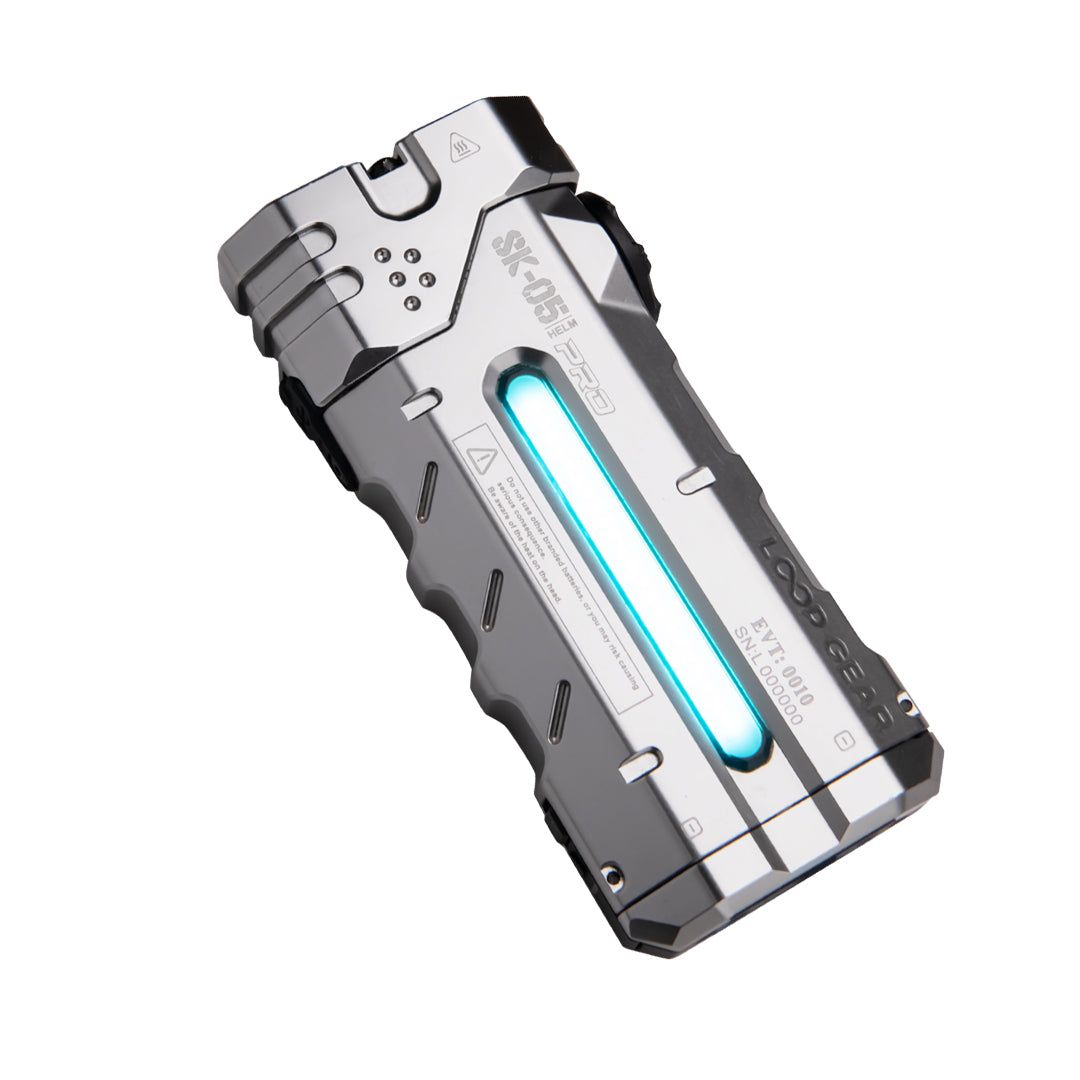
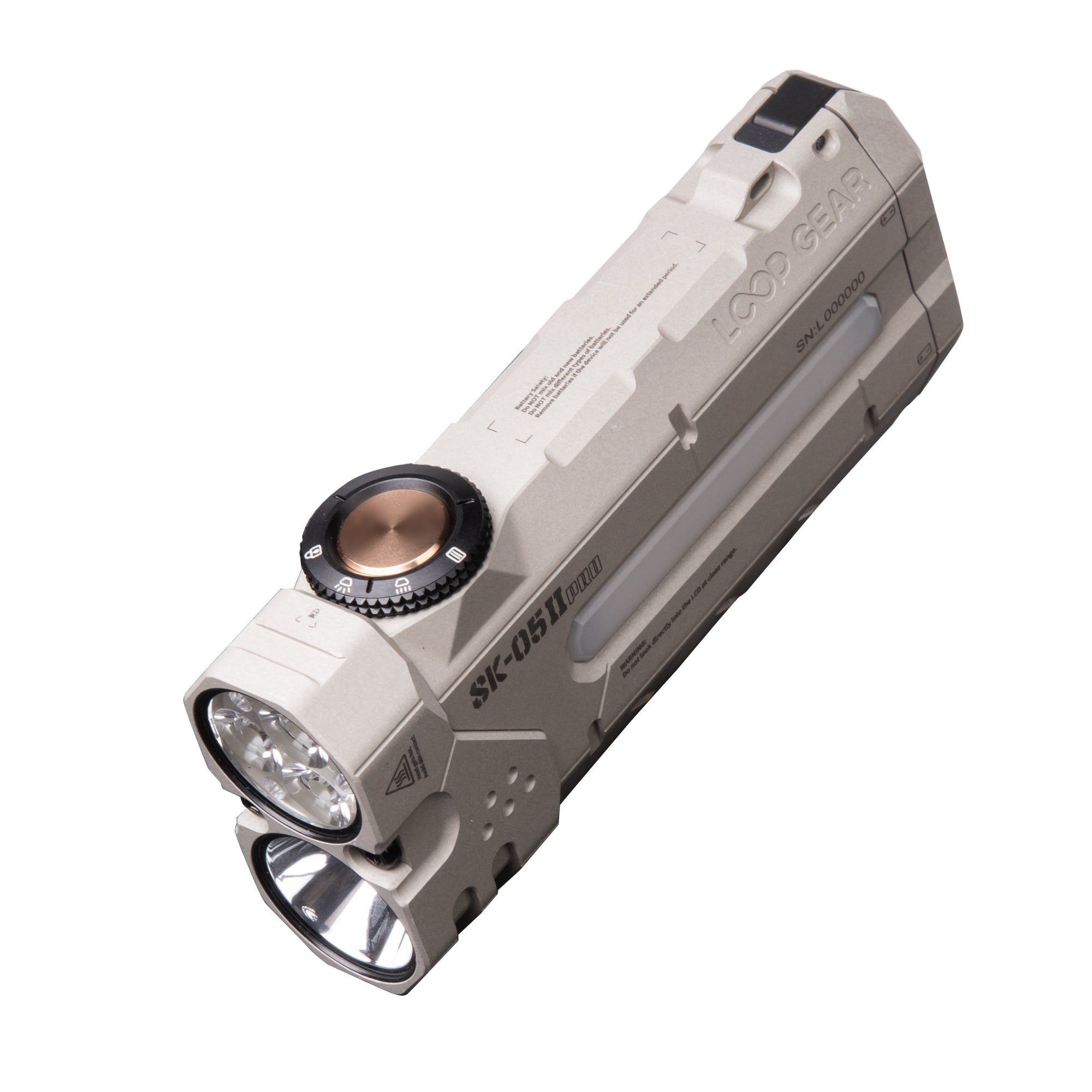
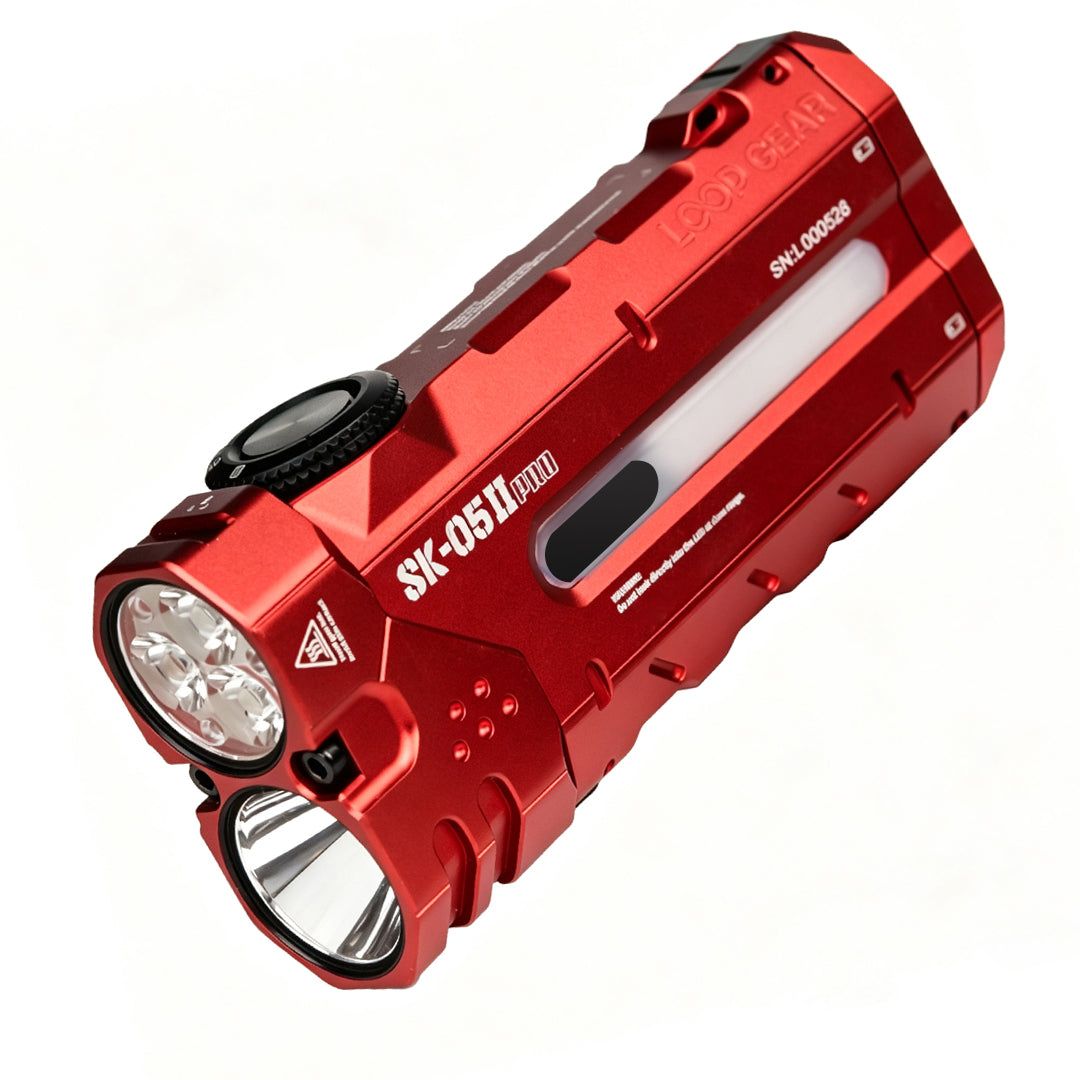
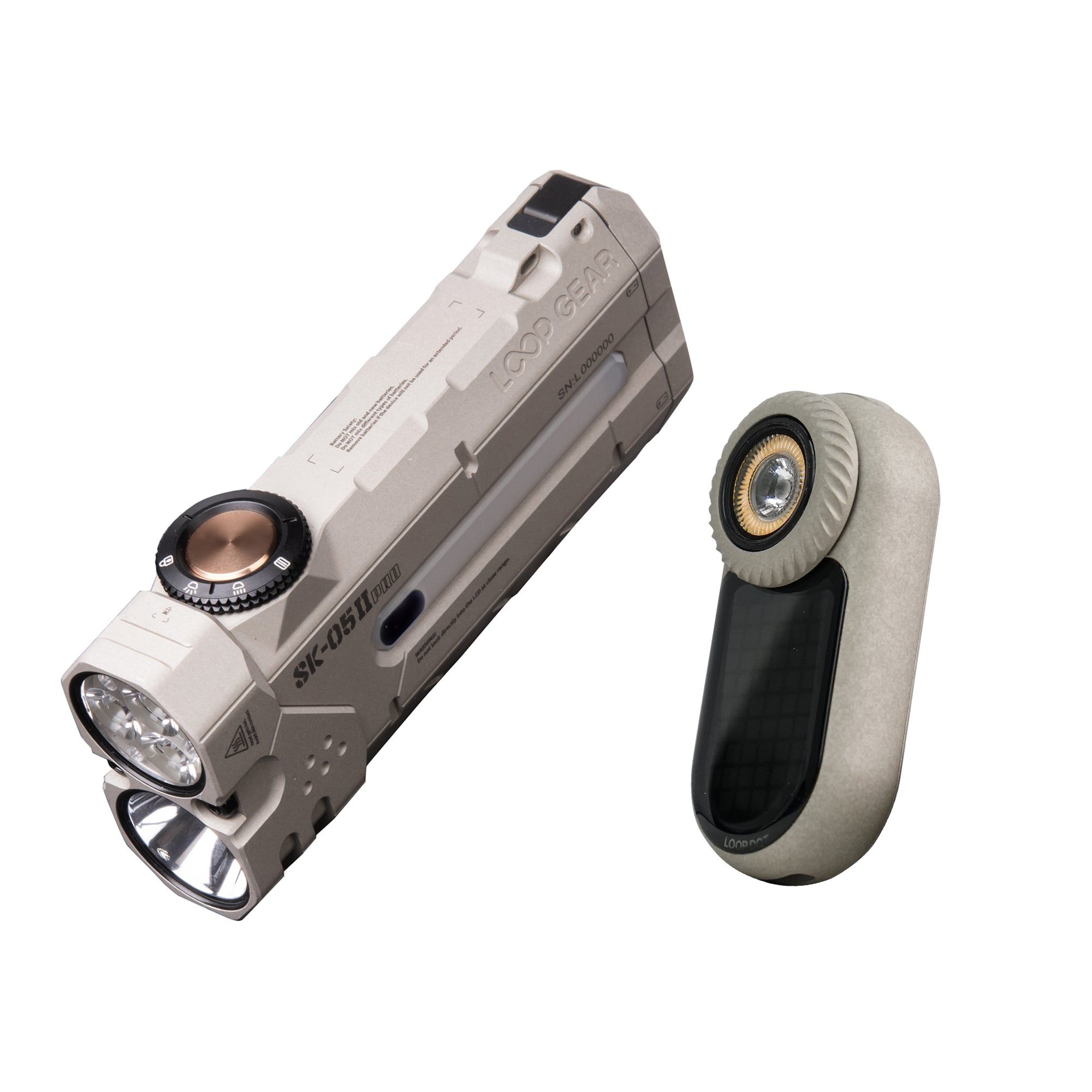
Loop Gear is a flashlight maker with an unusual signature: instead of the familiar tube, its best-known lights are flat slabs that sit in a pocket like a phone. The SK05 line has built a following among EDC enthusiasts for cramming a spotlight, a floodlight, a coloured sidelight and a power bank into one 23mm-thick body. This review covers what the brand makes, what the numbers actually measure at, and where the design still gives ground.
Quick Verdict: Is Loop Gear Worth It in 2026?
Verdict: 4.0 / 5 — one of the most interesting EDC form factors on the market, let down by heat management and a missing ultra-low mode. If you want a pocket light that does flood and throw without a round tube digging into your leg, the SK05 Pro 2 is close to unique. If you need feather weight or a true moonlight mode, look elsewhere. Current models are on the official Loop Gear store.
Best for: EDC carriers, gear collectors, anyone wanting flood and throw in one flat body
Flagship: SK05 Pro 2, around 2,900 lumens and 448m measured throw
Price: roughly $99.99 to $127.49; bundles near $171
Shipping: 195+ countries
Weak spot: turbo output drop under sustained use, no moonlight mode, 225g with cells
What Is Loop Gear and Who Should Use It?
Loop Gear Studio is a specialist flashlight designer rather than a general accessories brand. Its stated method is iterative — in the company’s own words, “we design, use, get inspired, redesign and on and on” — and that shows in a catalogue built around revisions of a few core shapes rather than a sprawling product list.
The range covers the flat SK05 family (Pro, Pro 2, and UV variants), the compact SK01S, the RGB-equipped SK03, the SK07, the small LOOPDOT series, and a set of accessories. The store ships to more than 195 countries and runs a membership programme alongside an active owner community.
Who It Is Best For
Everyday-carry users who dislike how round tube lights sit in a pocket
People who genuinely use both flood and throw and do not want two lights
Gear enthusiasts who value a distinctive design and a rotating-bezel interface
Anyone who wants a light that doubles as an emergency phone charger
It is a weaker fit for weight-conscious carry, for tasks needing a sub-lumen mode at night, or for buyers who want the lowest price per lumen.
A Closer Look at the Loop Gear SK05 Pro
Rather than claim a long-term test we did not run, this section works from the manufacturer’s specifications and from published independent measurements of the SK05 Pro.
The Numbers
Emitters: one Luminous SFT25R for throw, three Nichia 519a for flood at around 4000K
Output: up to roughly 2,910 lumens on flood turbo at switch-on
Throw: 448 metres measured
Power: two 18650 cells, 4000mAh included; USB-C recharge in about 3.5 hours
Size and weight: 106 × 46 × 23mm, 225g with cells
Extras: integrated sidelight with seven colours, power-bank output
Claims vs. Measured Reality
The headline lumen figure is real, but it is a switch-on number. Independent testing flags what owners call the turbo drop: sustained running on turbo and high sheds a significant chunk of that output as the body heats, which is physics working against a flat aluminium slab with limited mass to soak heat. Treat the peak figure as a burst, not a runtime.
The interface fares better. The rotating bezel is consistently described as intuitive, and the flood/throw split is the feature people actually keep using. The clearest omission is a moonlight or ultra-low mode, which matters more than the spec sheet suggests for anyone using a light indoors at night.
Loop Gear Pros and Cons
Pros
Flat form factor that carries far better than a tube light
Genuine dual flood and throw emitters rather than a compromise beam
Rotating bezel interface that is quick to learn
Seven-colour sidelight and usable power-bank output
Clean anodising and solid build quality
Warm 4000K flood rather than harsh cool white
Cons
Noticeable output drop on turbo and high during sustained use
No moonlight or ultra-low mode
225g with cells is heavy for pocket carry
Some unit-to-unit performance variation reported
Priced above budget enthusiast brands
Loop Gear vs. Wurkkos vs. Olight
Criteria
Loop Gear
Wurkkos
Olight
Form factor
Flat slab
Conventional tube
Tube and compact
Typical price
$100–$130
$25–$60
$60–$200
Interface
Rotating bezel
Anduril, deep menus
Simple, proprietary
Beam approach
Separate flood + throw
Single or dual emitter
Tuned single beam
Extras
Sidelight, power bank
Magnetic tail, USB-C
Magnetic charging
Best for
Distinctive EDC carry
Value per lumen
Polish and support
Wurkkos wins outright on price per lumen and on interface depth for people who like Anduril. Olight wins on finish, retail support and accessory ecosystem. Loop Gear’s claim is the form factor — no mainstream rival is putting this much light into a flat body you can carry like a wallet.
Loop Gear Pricing and Value for Money
SK05 Pro: around $99.99 on offer
SK05 Pro 2 (Mao White / Mao Gray): about $122.25
SK05 Pro 2 UV: $119.99, with the Red variant near $127.49
Bundles: around $171.75 for a kit
That is enthusiast pricing, not budget pricing. The fair way to read it is that you are paying for the form factor and the dual-emitter layout rather than for raw lumens — on lumens alone, cheaper brands beat it comfortably. If the flat carry is what you want, nothing else fills that slot; if it is not, the value case weakens fast. Current models and colour options are listed on the Loop Gear site.
Final Verdict on Loop Gear
Loop Gear earns 4.0 out of 5. The SK05 platform does something no mainstream competitor does, and it does it with a genuinely good interface, a pleasant warm flood and real extras rather than gimmicks. The marks come off for thermal throttling that undercuts the headline output and for the absence of a low mode that would cost nothing to include.
Independent measurement puts it near 2,910 lumens on flood turbo at switch-on, with 448 metres of throw from the spot emitter. Sustained output sits well below the peak once the body warms up.
What batteries does it use and how does it charge?
Two 18650 cells, supplied at 4000mAh, charged over USB-C in roughly three and a half hours. There is no proprietary cell requirement, which is a point in its favour for long-term ownership.
Can it charge a phone?
Yes. Power-bank output is built in, which is the practical justification for carrying two 18650s. It will not replace a dedicated battery pack, but it covers an emergency top-up.
What is the “turbo drop” people mention?
It is the output reduction that kicks in when turbo or high runs for a sustained period and the light manages its own heat. Every compact light does this to some degree; on a flat body with limited thermal mass it is more pronounced, and reviewers single it out here.
Is it worth it over Olight or Wurkkos?
Only if the flat form factor matters to you. On pure output per dollar Wurkkos wins; on retail polish and support Olight wins. Loop Gear is the answer to a specific question about how a light carries, not to which light is brightest for the money.
The iPhone 18 no ports theory is suddenly everywhere. A video making the rounds on TikTok and social media appears to show something startling: an iPhone — labeled as the “iPhone 18” — charging through a small magnetic connector instead…
Hottest fashion trends 2026 reviewed honestly — which trending styles are actually wearable, which are overhyped, and what’s worth buying right now in the US market. Quick Verdict: 2026’s biggest fashion trends fall into two camps: genuinely wearable evolutions of…
PS5 Pro review 2026 — I tested it for 30 days. Here’s the honest verdict on performance, graphics, and whether upgrading from a standard PS5 is actually worth the money. Quick Verdict: The PS5 Pro is the most capable PlayStation…