Mala beads look simple — a loop of 108 beads and a knot — but the price of one can run from under ten dollars to several thousand, and almost none of that gap is decoration. It is material, grading and craft. This guide explains how a mala is put together, what each material actually is, what the realistic price bands are in 2026, and how to pick one that suits how you will use it.
A note on claims: mala beads and materials such as rudraksha or Dzi carry meaning within Buddhist and Hindu practice. Those meanings are devotional and cultural. They are not medical or scientific claims, and nothing below should be read as one.
Quick Guide: What to Know Before Buying
Structure: 108 counting beads plus a larger guru bead
Common materials: bodhi seed, rudraksha, jade, agarwood, crystal, Dzi agate
Entry price: from about $9.99 for a simple bodhi bracelet
Mid range: roughly $20–$100 for most wearable strands
Buy for use, not display — a mala you are afraid to handle defeats the purpose
Why 108? The Structure of Mala Beads
A full mala carries 108 counting beads plus one larger bead, usually called the guru or meru bead, which marks the start and end of a round. In practice you move one bead per repetition of a mantra or breath, and when you reach the guru bead you turn the strand and go back rather than crossing it.
Shorter versions exist and are entirely normal: 54-bead half malas and 27-bead wrist malas divide evenly into 108, so two or four rounds give the same count. Most of what is sold as a bracelet is a 27-bead wrist mala, which is why bracelet-style mala beads dominate the lower price bands.
Wrist or Neck?
27-bead wrist mala: everyday wear, discreet, cheapest entry point
54-bead half mala: a compromise for longer sessions without bulk
108-bead full mala: traditional, worn round the neck or looped, best for seated practice
Mala Beads Materials, and What Drives the Price
Material is where nearly all the cost sits. Knowing the vocabulary is the difference between paying for craft and paying for a label.
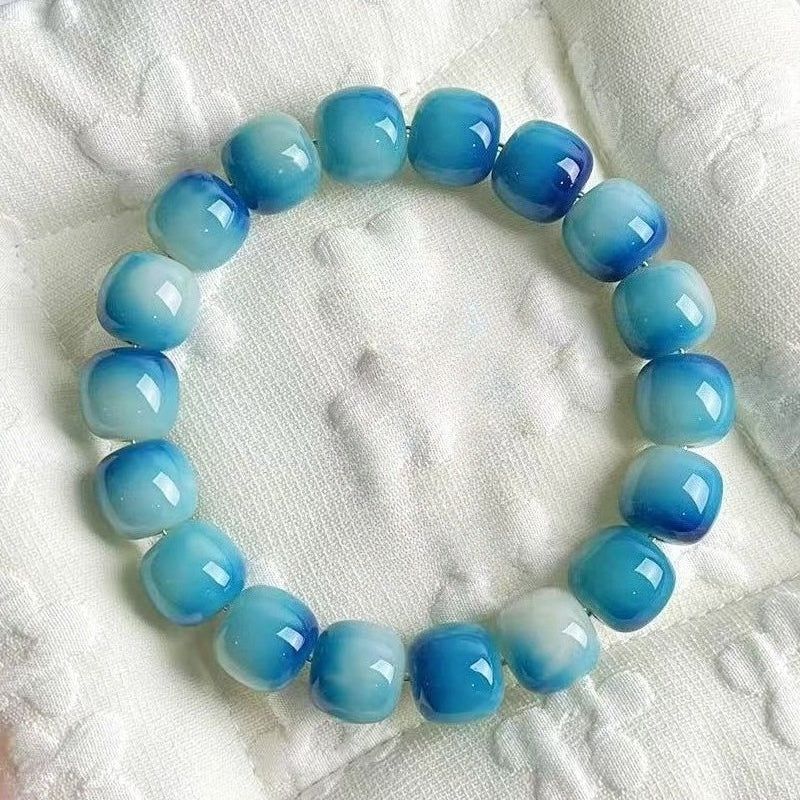
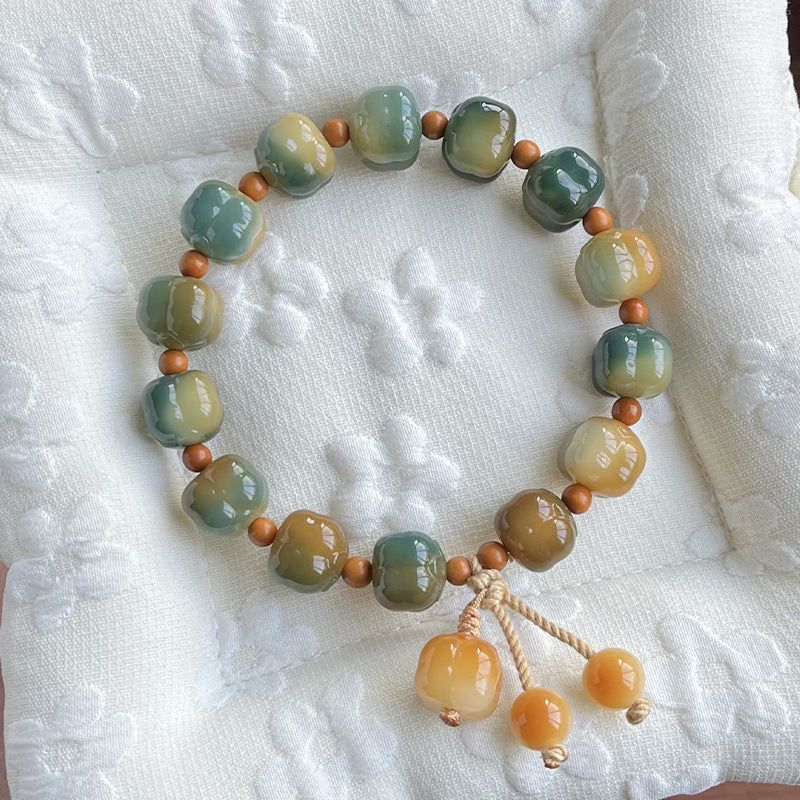
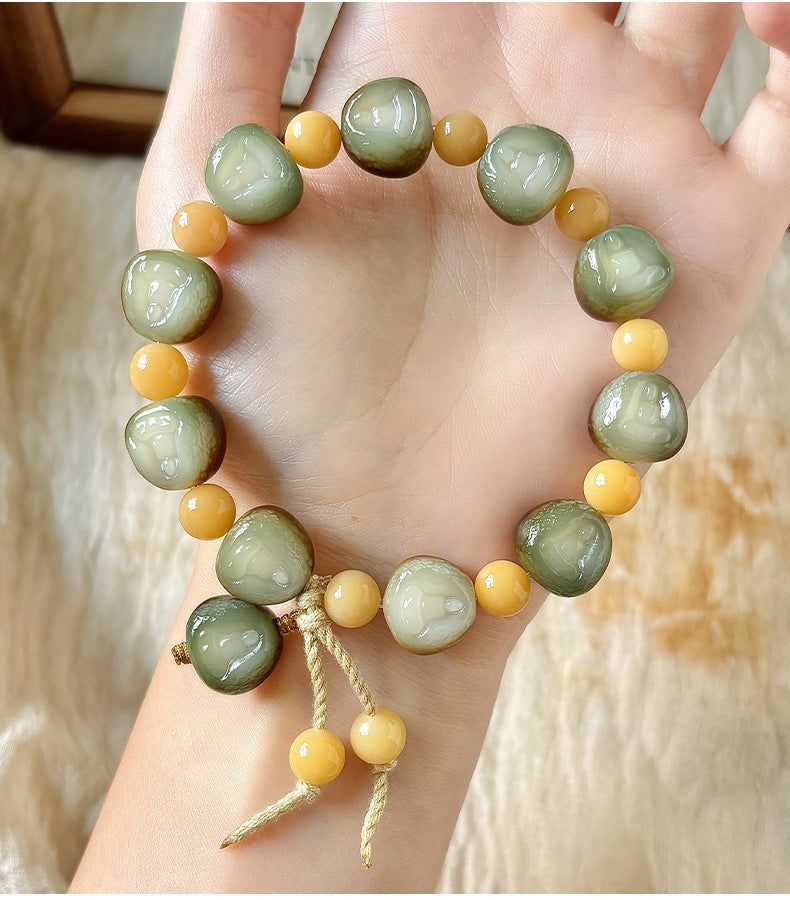
Bodhi seed: the most common traditional material and the cheapest good option. Varieties such as star moon, persimmon and “flower skin” differ in grain and colour, and they darken with handling over years
Rudraksha: seeds of the Elaeocarpus tree, graded by natural facets or mukhi; five-mukhi is common and inexpensive, unusual counts are rare and priced accordingly
Jade: cool, heavy, durable; price depends heavily on type and translucency rather than on the word “jade” alone
Agarwood: resinous heartwood valued for scent and density. Quality ranges enormously, and cheap “agarwood” is often scented substitute
Dzi agate: patterned Himalayan beads. Genuine antique Dzi is rare and very expensive; the overwhelming majority sold today is modern, which is normal but affects value
Crystal and stone: broad category, priced by clarity and cut more than by rarity
Two practical warnings. Any listing that offers antique Dzi or high-grade agarwood at a bargain price should be treated with scepticism, because both are genuinely scarce. And bead count matters to price: a full 108-bead strand needs far more matched material than a 27-bead bracelet, so like-for-like comparisons have to hold the count constant.
Real Prices for Mala Beads in 2026
Item
Material
Price
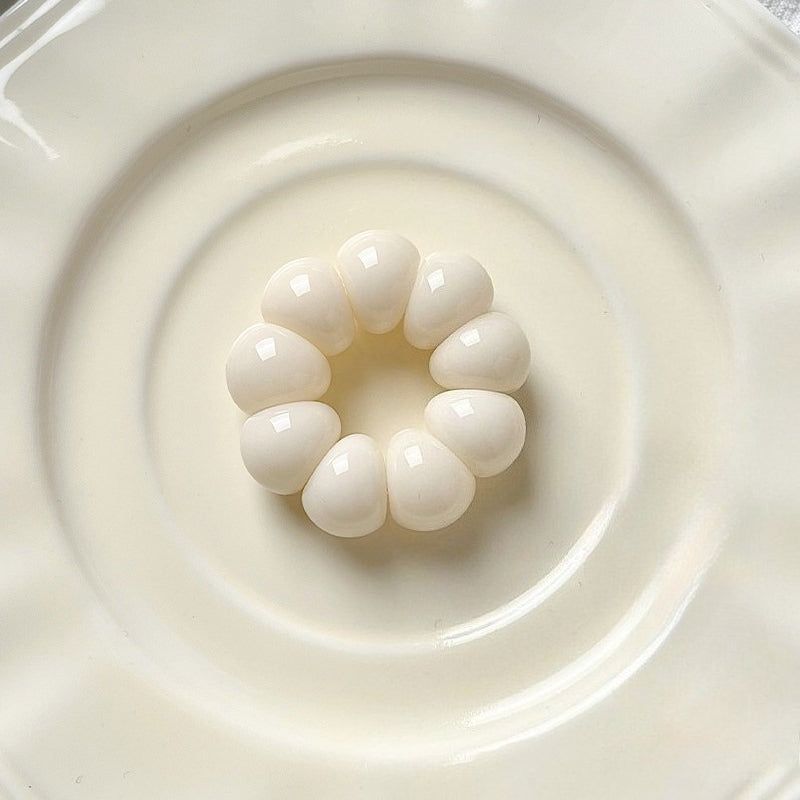
White jade bodhi garlic-clove bracelet
Bodhi seed with jade
$9.99
Bodhi seed smooth barrel bracelet
Bodhi seed
$19.99
Taro purple gold wheel bodhi bracelet
Bodhi seed
$19.99
Dunhuang little persimmon bodhi bracelet
Bodhi seed
$29.99
Carved Wuxiang Buddha bodhi bracelet
Carved bodhi seed
$29.99
Collector-grade carved pieces
Walnut, premium material
up to $3,333
The pattern is consistent across sellers: bodhi seed bracelets sit in the $10–$30 band, carving and unusual grain push toward the top of it, and the four-figure end of any catalogue is collector material rather than practice material. For a first purchase, the $10–$30 band buys a genuinely usable strand.
How to Choose Mala Beads You Will Actually Use
Match the bead size to your hand — 6–8mm suits most wrists; 10mm and above is easier to count but bulky to wear
Choose a material you will not baby — bodhi seed and rudraksha are meant to be handled and improve with it
Check the knotting and the cord, since that is what fails first on a strand worn daily
Decide wrist versus full length before you shop, because it changes the price band entirely
Ignore claims of energy, luck or healing when comparing value — buy on material, craft and feel
The specialist retailer used for the prices above lists bodhi, rudraksha, jade, agarwood and Dzi separately by material rather than bundling everything as “spiritual jewellery”, which makes comparison easier. You can see the current range on the Buddha3Bodhi mala collection.
Caring for Mala Beads
Seed and wood malas develop a patina from skin oils and handling — that darkening is the point, not damage, and it is why an old bodhi strand looks nothing like a new one. Keep them dry, avoid soap and perfume, and wipe with a dry cloth rather than washing.
Stone and jade mala beads are more forgiving of moisture but chip if dropped on tile. Whatever the material, the cord is the weak point: if it stiffens, frays or stretches noticeably, restring before it breaks rather than after.
Buying Safely Online
Prefer sellers who name the material and bead count in the listing rather than in vague copy
Pay with a method that carries buyer protection
Check the return window before ordering, especially for higher-value pieces
Start with a modest strand from any seller you have not bought from before
Treat unverifiable provenance claims as marketing until documented
The store referenced here offers free worldwide shipping above $59 and a 30-day return window, which covers the ordinary risks of a first order — see the current catalogue and policies.
Final Thoughts
Good mala beads are not the expensive ones; they are the ones matched to how you use them. A $20 bodhi seed bracelet handled daily for a decade will be a better object than a display piece kept in a box — the material is designed to change under the hand. Buy for the count you will actually use, in a material you are willing to wear out, and let the price follow from that.
108 is a traditional number in Buddhist and Hindu practice, and the count is practical as well as symbolic: it divides evenly into 54 and 27, which is why half malas and wrist malas exist and still give a whole number of rounds.
Which material should a beginner buy?
Bodhi seed. It is inexpensive, traditional, comfortable to count with, and it improves visibly with handling — so a cheap strand becomes more attractive with use rather than looking worn out.
How much should mala beads cost?
A usable bodhi or rudraksha wrist strand sits around $10–$30. Full 108-bead strands and better materials rise from there, and anything in four figures is collector-grade rather than a practice tool.
Can I wear a mala as jewellery?
Many people do, and wrist malas are made for it. If the mala is used in practice, common courtesy in most traditions is simply to treat it with care — keep it clean and off the floor.
Do mala beads have healing powers?
The qualities attributed to specific materials come from religious and cultural tradition, not from clinical evidence. A mala is a counting tool that supports a practice; it is not a treatment, and it should not replace medical care.
The iPhone 18 no ports theory is suddenly everywhere. A video making the rounds on TikTok and social media appears to show something startling: an iPhone — labeled as the “iPhone 18” — charging through a small magnetic connector instead…
Hottest fashion trends 2026 reviewed honestly — which trending styles are actually wearable, which are overhyped, and what’s worth buying right now in the US market. Quick Verdict: 2026’s biggest fashion trends fall into two camps: genuinely wearable evolutions of…
PS5 Pro review 2026 — I tested it for 30 days. Here’s the honest verdict on performance, graphics, and whether upgrading from a standard PS5 is actually worth the money. Quick Verdict: The PS5 Pro is the most capable PlayStation…