
How to dress minimalist for work in 2026 — a practical step-by-step guide to building a capsule wardrobe for the US office that looks polished, saves time, and never goes out of style.
Quick Answer: Minimalist office dressing isn’t about owning less — it’s about owning smarter. Five core pieces, three neutral colors, and one consistent fit principle will take you further than a closet full of trend-driven items. This guide gives you the exact framework to build it in under a weekend.
Why Minimalist Office Style Works in 2026
The American workplace dress code has shifted dramatically since 2020. Business casual is now the default in most US offices — but “business casual” means something different in every company, every city, and every industry. The result: most professionals are either overdressed, underdressed, or spending too much mental energy every morning deciding what to wear.
Minimalist dressing solves this problem structurally. A small, intentional wardrobe of high-quality neutral pieces eliminates decision fatigue, looks consistently polished across environments, and actually costs less over time than constantly chasing trends.
Here’s exactly how to build it.
Step 1 — Commit to Three Base Colors
The foundation of any minimalist wardrobe is a strict color palette. For US office environments in 2026, the most versatile three-color base is:
Navy + White + Camel/Tan
Everything in your wardrobe should work with everything else. Navy and white mix cleanly. Camel warms both. Add one accent color — burgundy, forest green, or slate blue — for variety without chaos.
What to avoid: buying pieces in colors that only work with one other item. If a shirt only works with one pair of trousers, it doesn’t belong in a minimalist wardrobe.
Step 2 — Build Your Core 5 Pieces
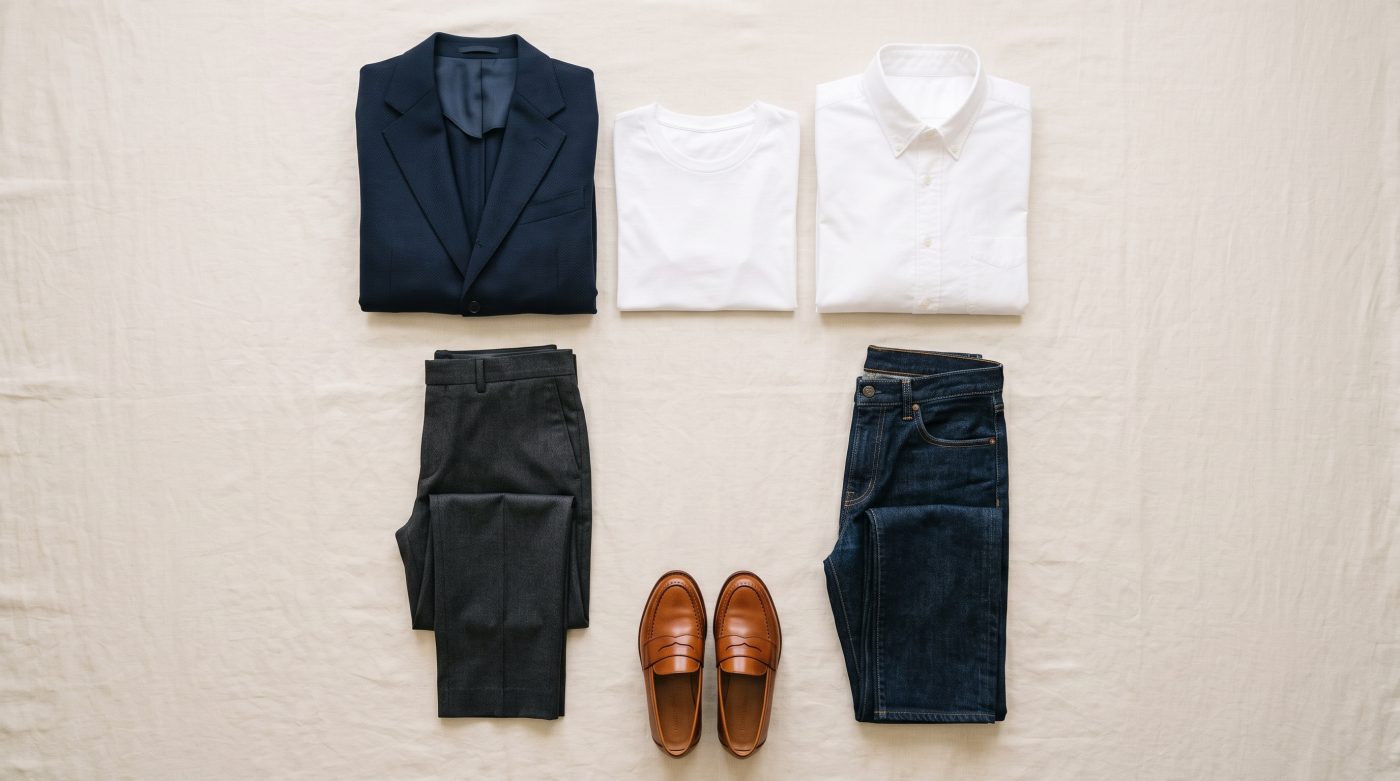
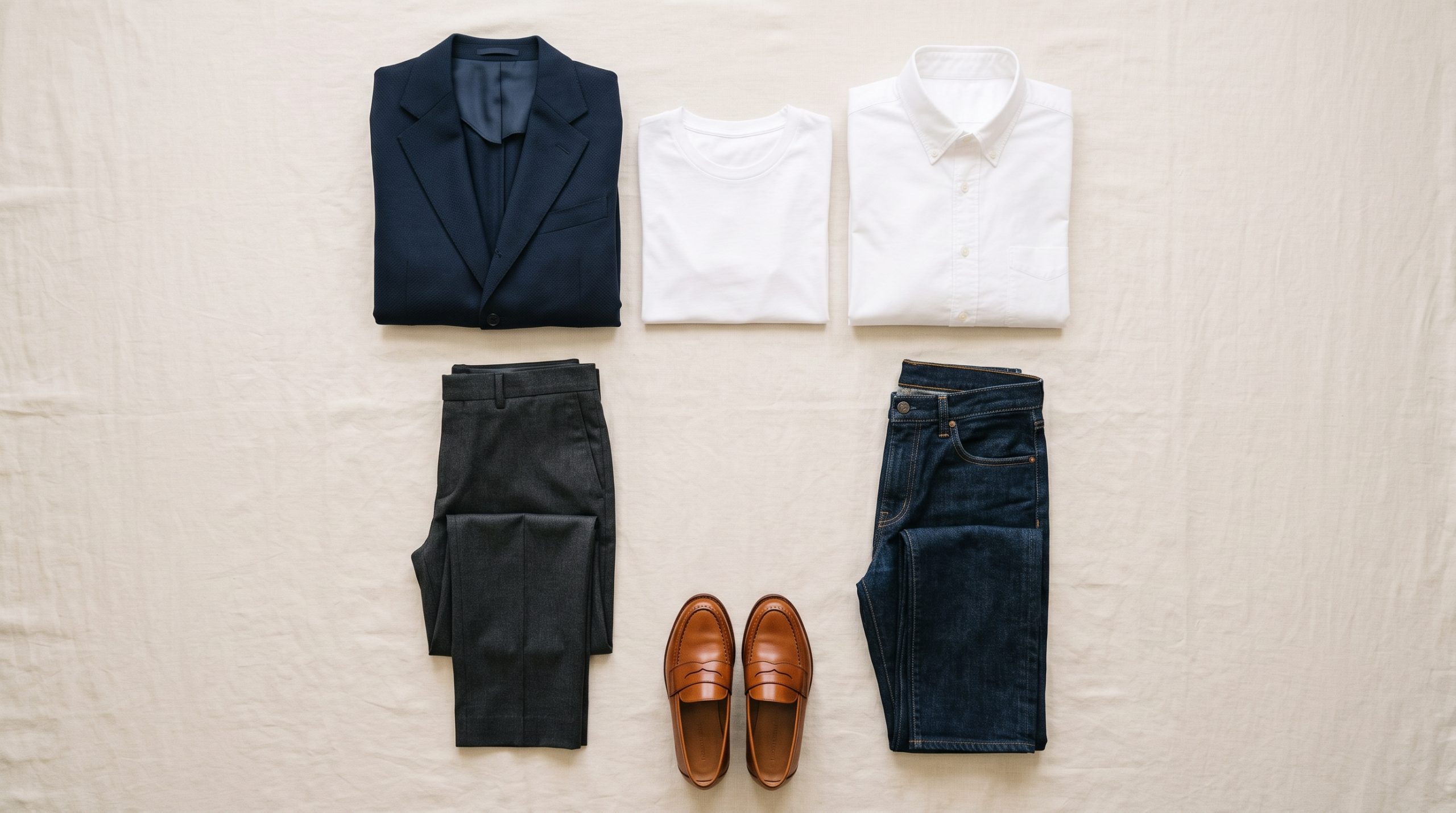
These five pieces form the backbone of a minimalist office wardrobe. Every item should be neutral, well-fitted, and high enough quality to last 2–3 years of regular wear.
1. A Tailored Blazer
Navy or camel. Structured enough to wear to a client meeting, relaxed enough to pair with dark jeans. This is your most versatile investment piece — wear it over a tee for smart casual, over a button-up for business casual.
2. A White Oxford Shirt
100% cotton, non-iron if possible. Tuck it in for formal days, half-tuck for casual Fridays. A well-fitted white Oxford works in every US office environment without exception.
3. Dark Slim-Straight Trousers
Navy or charcoal. Not skinny, not wide-leg — slim-straight hits the middle ground that reads professional in 2026 without looking dated. These should sit at the natural waist and break cleanly at the ankle.
4. A Clean White or Light Grey Tee
Premium cotton, fitted but not tight. This is your layering foundation — under the blazer for smart casual, on its own for casual Fridays, under a button-up left open for the in-between days.
5. Dark Wash Straight Jeans
Not distressed, not light wash. Dark denim in a straight cut bridges the gap between casual and business casual effortlessly. In most US offices in 2026, dark jeans with a blazer reads as professional.
Step 3 — The Fit Rule (Most Important Step)
Every minimalist wardrobe lives or dies on fit. An expensive piece in the wrong size looks worse than a cheap piece tailored correctly.
The three fit checkpoints:
Shoulders: Shoulder seams should sit exactly at the edge of your shoulder — not hanging over, not pulling inward. This applies to blazers, shirts, and tees.
Chest/torso: Clothes should skim the body without pulling. You should be able to slip two fingers inside a buttoned shirt at the chest — any more is too loose, any less is too tight.
Length: Shirt hems should hit the middle of your back pockets. Trouser hems should break once at the top of your shoe — no more. Blazer sleeves should show a quarter inch of shirt cuff.
If an item fails any of these checkpoints, either tailor it (~$15–30 at most US dry cleaners) or replace it. No amount of quality fabric recovers from poor fit.
Step 4 — Shoes & Accessories (Keep It Simple)
Minimalist dressing extends to accessories. The goal: one shoe style, one bag, one watch or simple jewelry piece.
Shoes: White leather sneakers or tan leather loafers cover 90% of US office environments in 2026. Both work with dark trousers, dark jeans, and chinos. Avoid loud colors, heavy branding, or athletic runners.
Bag: A structured tote or slim backpack in black, navy, or tan. No logos. No excessive pockets or hardware. It should look intentional on a subway platform and in a boardroom simultaneously.
Watch or jewelry: One piece only. A simple metal watch, a thin chain, or small stud earrings. The minimalist principle: if you’re thinking about whether to add one more piece — don’t.
Step 5 — The Weekly Rotation System
Five core pieces create more outfit combinations than most people realize. Here’s a sample week using the core 5:
| Day | Outfit |
|---|---|
| Monday | White Oxford + Navy Trousers + Tan Loafers |
| Tuesday | White Tee + Blazer + Dark Jeans + White Sneakers |
| Wednesday | White Oxford (half-tucked) + Dark Jeans + Loafers |
| Thursday | Grey Tee + Blazer + Navy Trousers + Loafers |
| Friday | White Tee + Dark Jeans + White Sneakers |
Five days. Five outfits. Zero repeated combinations. Zero morning stress.
Step 6 — Where to Buy in the US on a Realistic Budget
Building a minimalist office wardrobe doesn’t require luxury brands. These retailers consistently deliver the quality-to-price ratio that minimalist dressing requires:
Under $100 per piece: Uniqlo (best for tees, Oxford shirts, and basic trousers), H&M Premium, Target’s A New Day line for women.
$100–200 per piece: Everlane (ethical basics, excellent fit), Banana Republic Factory, J.Crew, Club Monaco for blazers and trousers.
Investment pieces worth spending on: A single well-made blazer ($150–250) and leather shoes ($120–200) will outlast five cheap versions of the same items.
Where to start if budget is tight: Buy the blazer and the dark trousers first — these anchor the entire wardrobe. Add the Oxford and tees second. Shoes last, but don’t cheap out when you get there.
Common Mistakes to Avoid
Buying too many “basics” at once. Start with the core 5 and wear them for 30 days before adding anything. You’ll discover what you actually need versus what you think you need.
Ignoring care instructions. A $200 blazer ruined in the dryer is worse than a $50 blazer maintained correctly. Check labels. Air dry structured pieces. Steam instead of iron when possible.
Mistaking minimalist for boring. Texture, fabric quality, and fit create visual interest without pattern or color. A camel blazer in heavy linen reads more interesting than a patterned shirt that doesn’t fit.
Buying pieces that only work with one outfit. Every item should work with at least three other pieces in your wardrobe. If it doesn’t — it’s not minimalist, it’s just expensive.
People Also Ask
Q: How many clothes do I need for a minimalist office wardrobe?
A: The core 5 pieces create enough combinations for a full work week. Add 2–3 backup basics (extra tees, a second Oxford) for laundry flexibility. 8–10 total pieces is sufficient for most professionals.
Q: Is minimalist office style appropriate for all US industries?
A: For tech, creative, finance, consulting, and most corporate environments — yes. For law, government, or very traditional industries — the same principles apply but with more formal pieces (dress shirts instead of tees, Oxford shoes instead of sneakers).
Q: How do I make a minimalist wardrobe look more interesting?
A: Texture and fit. A well-fitted camel linen blazer, dark wool trousers, and white leather sneakers reads more intentional and stylish than a patterned outfit in poor fit.
Q: What’s the best brand for minimalist office basics in the US?
A: Uniqlo for everyday basics, Everlane for investment pieces, Banana Republic Factory for blazers and trousers on sale. All three have strong US availability online and in-store.
Final Checklist Before You Shop
- Commit to 3 base colors — everything must mix with everything
- Core 5 pieces only to start — blazer, Oxford, trousers, tee, dark jeans
- Check fit at all three checkpoints before buying
- One shoe style, one bag, one accessory
- Buy quality over quantity — one great blazer beats three mediocre ones
📌 Save this guide and come back to it before your next shopping trip. A minimalist wardrobe built right the first time saves you money, time, and closet space for years.