Adalo Review: The Ultimate Honest Guide to No-Code App Development
This Adalo review delves into one of the leading platforms for no-code app development. Building a mobile application has historically been a significant hurdle for many aspiring entrepreneurs and startups. The traditional app development cost can range from $20,000 to over $150,000, even for a basic Minimum Viable Product (MVP). This expense often necessitates hiring a team of developers, designers, and project managers, leading to months of development time.
The rise of no-code platforms has revolutionized this landscape, enabling founders to build app without code. Adalo stands out as a prominent player, promising the ability to create real mobile applications for iOS, Android, and the web without writing a single line of code. This offer is particularly compelling for entrepreneurs, coaches, agencies, small businesses, and non-technical founders. But how does Adalo truly perform beyond the initial excitement? This comprehensive Adalo review examines its features, pricing, user experiences, and suitability for various projects.

Understanding Adalo: A Brief Overview
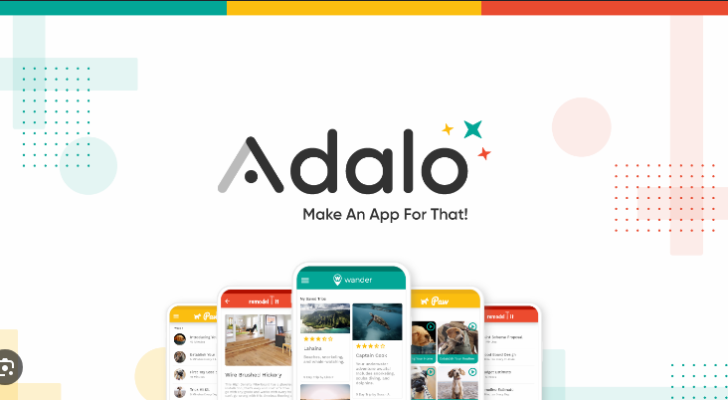
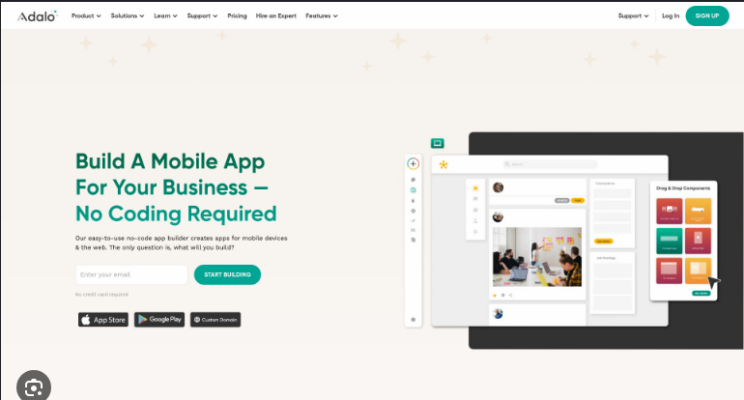
Founded in 2018 by David Adkin, Adalo’s core mission is to democratize app development, making it accessible to individuals without programming expertise. Since its inception, Adalo has established itself as a recognized mobile app builder in the no-code market. Unlike many website builders, Adalo is specifically designed for creating functional applications.
Users can leverage Adalo to develop a diverse range of applications, including:
- Marketplace apps
- Booking platforms
- Community apps
- Internal business tools
- Fitness apps
- Membership platforms
- Educational applications
- E-commerce solutions
A key differentiator for Adalo is its native mobile publishing capability. While many no-code competitors focus on web applications or Progressive Web Apps (PWAs), Adalo enables direct publication to the Apple App Store, Google Play Store, and web browsers from a single visual project. Recent platform updates, including Adalo 3.0, have also addressed performance concerns and removed previous usage-based pricing limitations, enhancing the user experience.
Key Adalo Features for No-Code App Development
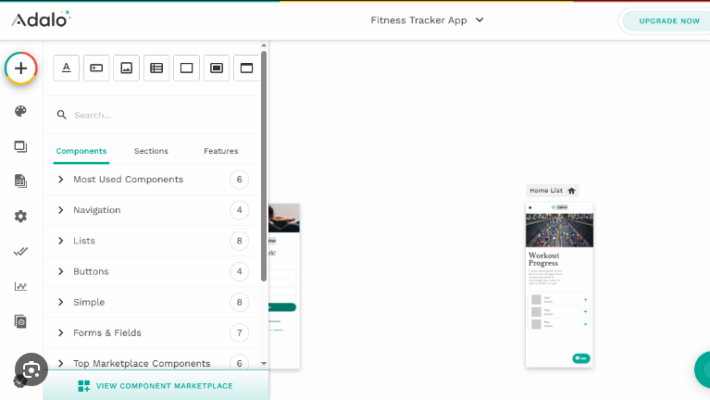
Visual Drag-and-Drop Builder: Build App Without Code
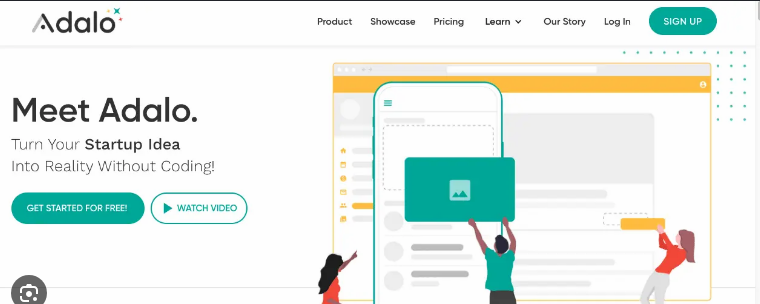
Traditional app development demands proficiency in programming languages like JavaScript, Swift, Kotlin, or React Native, which can take years to master or tens of thousands of dollars to outsource. Adalo simplifies this by replacing complex coding with a visual, drag-and-drop interface.
Users can easily add and connect various elements on a canvas, such as buttons, forms, images, lists, navigation menus, and user account functionalities. This visual approach significantly lowers the barrier to entry, allowing founders to create functioning prototypes quickly and validate their ideas before committing substantial resources. This is a core strength highlighted in every Adalo review.
Native Mobile App Publishing
A common pitfall with some no-code solutions is that they deliver web applications disguised as mobile apps, leading to compromised performance, poor user experience, and potential app store rejection. Adalo differentiates itself by generating native iOS and Android applications that can be submitted directly to official app stores.
This native publishing capability is a significant advantage, particularly for businesses where mobile adoption is critical. It lends credibility and ensures a smoother, more integrated user experience, often making Adalo a preferred choice over exclusively web-focused platforms for startup app development.
Built-In Database System
Any functional app requires a robust database to store and manage data like user profiles, orders, appointments, and messages. Traditional database management can be technically challenging, requiring knowledge of server administration and SQL queries. Adalo addresses this by including a built-in relational database system.
Users can visually create collections and define relationships between data points without needing to write code or manage servers. This integration allows for the development of complete applications within a single platform, simplifying the process for beginners and reducing overall technical complexity.
Templates and Marketplace Components
Starting an app from a blank canvas can be daunting. Adalo mitigates this by offering a wealth of pre-built resources, including:
- Ready-to-use templates
- Reusable components
- Third-party integrations
- Payment modules
- Mapping tools
- Authentication systems
These resources can be easily incorporated without coding, allowing users to focus on unique business logic and customer experience rather than rebuilding basic functionalities. This significantly shortens launch timelines and accelerates startup app development.
AI App Generation
Recognizing that even no-code platforms have a learning curve, Adalo has introduced AI-assisted app generation. Users can now generate initial app structures from simple prompts, which can then be customized visually. This innovative feature further lowers the entry barrier, providing founders with a working foundation to build upon instead of starting from scratch.
Adalo Pricing: Understanding the Investment
When considering app development cost, Adalo offers various plans designed to cater to different needs, from individual creators to growing businesses. While specific pricing details are subject to change, typically Adalo provides:
- Free Plan: Ideal for testing the platform and building basic apps for personal use. It usually comes with limitations on features and publishing options.
- Starter/Pro Plans: Offer more features, increased database records, custom domains, and the ability to publish to app stores. These are suitable for individuals and small businesses looking to launch their first app.
- Business/Team Plans: Designed for larger projects, offering dedicated support, more extensive database capacity, and advanced collaboration features.
It’s crucial to review the most current Adalo pricing directly on their website, as features and costs can evolve. Compared to traditional development, Adalo presents a significantly more affordable pathway to launch an app, making it attractive for budget-conscious startups.
Real-World Performance and User Experience
This is where any honest Adalo review must address nuances. Adalo is widely praised for its beginner-friendliness. TechRadar, for instance, has highlighted it as one of the easiest no-code platforms, particularly for users without a technical background. User feedback on platforms like Reddit often echoes this sentiment, commending its ease of use, speed in MVP creation, strong learning resources, and quick deployment for first-time founders.
However, recurring performance complaints emerge as applications scale. Users frequently report challenges with larger databases, complex workflows, increasing user counts, and advanced custom logic requirements. Many reviewers conclude that Adalo excels for MVPs and simpler applications but may not be the optimal choice for highly sophisticated SaaS products or applications requiring extreme performance and scalability. The consistent pattern suggests that Adalo performs well for simple apps, but more complex applications can experience limitations.
Conclusion: Is Adalo Right for Your Project?
This Adalo review highlights its strength as a powerful no-code app development platform, particularly for individuals and startups looking to build app without code and rapidly launch an MVP. Its visual builder, native mobile publishing, integrated database, and extensive templates significantly reduce the barriers to entry for startup app development. The recent addition of AI app generation further enhances its accessibility.
While Adalo offers an incredibly attractive solution for getting an app off the ground at a fraction of the traditional app development cost, users should be mindful of potential performance limitations as their application scales in complexity and user base. For simple to moderately complex apps, validating ideas, or creating internal tools, Adalo is an excellent choice. For highly complex, enterprise-grade applications, a thorough evaluation of its scalability and customizability against your long-term vision is recommended. Ultimately, Adalo empowers a new generation of creators to bring their app ideas to life.