
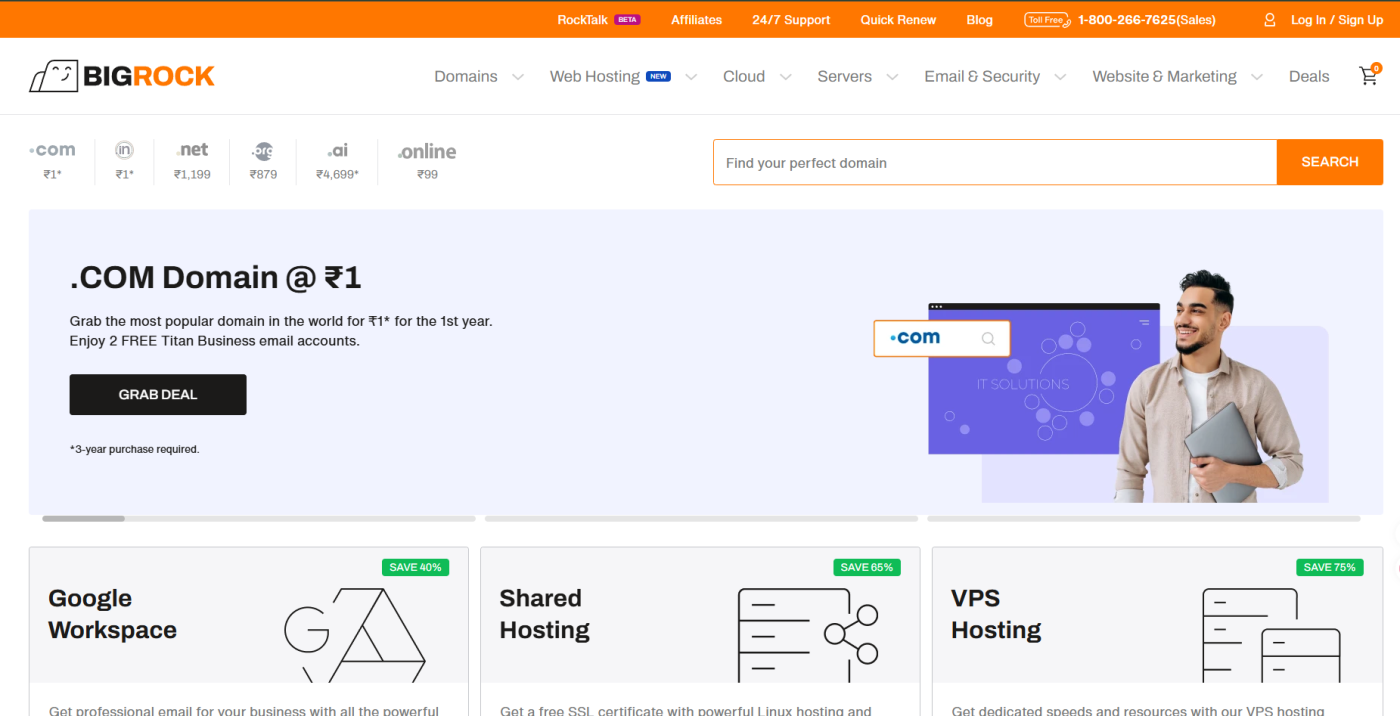






Most people launching websites aren’t dreaming of enterprise-level infrastructure. They’re focused on staying within a limited budget, navigating confusing hosting terms, and simply getting their site online without breaking the bank. This is where companies like BigRock come in.
BigRock heavily focuses on domain registration, shared hosting, WordPress hosting, business email, VPS services, and providing beginner-friendly web infrastructure. BigRock thrives because it understands that many customers prioritize affordability and functionality over top-tier performance.
This BigRock hosting review approaches the platform from the perspective of real-world small business hosting, budget website deployment, and beginner practicality. We’re not focused on enterprise cloud solutions or chasing unrealistic performance claims. The core question is: Can users reliably keep their websites online without constant technical frustration?
This is the fundamental reason why budget hosting brands remain popular worldwide. Most websites are not high-traffic SaaS applications. They’re local businesses, portfolios, blogs, affiliate sites, small e-commerce stores, and beginner projects. These users prioritize affordability and simplicity.
BigRock has aggressively positioned itself around entry-level accessibility, particularly in India and other emerging digital business markets. This strategy makes perfect sense for their target audience.
This is BigRock’s clearest advantage. Many beginners are intimidated by the potential technical costs of starting a website. BigRock emphasizes low-cost hosting, cheap domains, bundled services, and aggressive discounts.
This pricing strategy significantly lowers the barrier to entry for first-time website owners, including students, freelancers, small businesses, and those working on side projects. This affordability is a key reason why the brand remains popular despite intense competition in the cheap web hosting market.
Psychologically, this is important. Many new website owners simply want their site to load. They’re not actively benchmarking server response times in milliseconds. This reality strongly benefits budget hosting providers.
For many low-traffic websites, basic hosting is “good enough.” BigRock succeeds partly because the majority of beginner users don’t require premium infrastructure for their beginner hosting needs.
Honesty is key here. The most common criticisms surrounding BigRock involve inconsistent uptime, slow support response times, frustration with renewal pricing, and limitations in server performance. These complaints appear repeatedly in hosting review communities and customer discussions.
This doesn’t necessarily mean the platform is unusable. However, it reinforces the reality that budget hosting almost always involves tradeoffs, particularly in speed, scalability, and customer service quality. This tradeoff is extremely common in the low-cost hosting market. If you need support, you may not find it as fast as other services.
This deserves specific attention. Many users’ first interaction with BigRock is through domain purchasing. The platform offers domain search, DNS management, business email integration, and bundled web services. For basic domain management, the system is generally simple enough for non-technical users.
This accessibility is crucial for small business adoption, especially among first-time website owners looking for domain registration services.
This is strategically important to understand. Cheap introductory hosting prices often exist to bring users into broader ecosystems that include SSL certificates, email hosting, backups, security tools, and renewal upgrades. BigRock follows the same industry strategy used by many large hosting brands.
This doesn’t make the company uniquely deceptive. However, users must understand that introductory pricing rarely reflects long-term costs. Keep this in mind when considering shared hosting plans.
This is evident throughout the platform. WordPress remains the dominant website-building ecosystem globally. BigRock heavily markets easy WordPress deployment and beginner setup workflows.
This positioning makes sense because many users want blogging platforms, affiliate sites, business pages, and simple e-commerce stores without needing to learn server administration. The easier the onboarding, the better budget hosting performs commercially. For many, BigRock hosting review outcomes are based on how well WordPress works.
This deserves practical honesty. Many users outgrow entry-level hosting plans surprisingly quickly, especially once websites gain traffic, plugins, e-commerce functionality, or heavy media usage. Shared hosting environments naturally create resource limitations.
This means BigRock often works best for small-to-medium, low-complexity websites – not aggressively scaling businesses. This distinction is extremely important for those planning for future growth.
Strategically, this is fascinating. Many global hosting brands overlook regional affordability realities. BigRock benefits heavily from local-market familiarity and pricing sensitivity, especially among Indian freelancers, local businesses, startups, and first-time entrepreneurs.
That regional positioning gives them a competitive edge in a key market. If you are looking for budget website hosting in India, BigRock may be a strong contender.
Reviews
There are no reviews yet.