

Zara vs H&M — which fast fashion brand is actually worth your money in the US market? I tested both for 30 days across quality, price, style, and sustainability. Here’s the real verdict.
Quick Verdict: Zara wins on style and fabric quality; H&M wins on price and size range. If your budget is $30–60 per piece and you want runway-inspired looks that last 2–3 seasons, go Zara. If you’re dressing on a tighter budget or need inclusive sizing, H&M delivers better value per dollar. Neither brand is “better” — they serve different shoppers.
Why This Comparison Still Matters in 2026
Fast fashion has taken a beating in the press. But Zara and H&M remain two of the most-shopped clothing brands in the US, UK, and Canada — and for a lot of working adults, they’re still the most practical way to build a functional, decent-looking wardrobe without a luxury budget.
The problem is most comparisons online read like brand brochures. So I spent 30 days buying, wearing, and washing pieces from both — same categories, similar budgets — and tracked the results honestly.
Quick Spec Comparison
| Category | Zara | H&M |
|---|---|---|
| Price range (tops) | $25–$70 | $10–$40 |
| Price range (pants) | $40–$100 | $20–$60 |
| Size range | XS–XXL (limited) | XS–4XL (extended) |
| New arrivals frequency | ~2x per week | ~weekly |
| Fabric quality (avg) | Medium-high | Low-medium |
| Sustainability line | Zara Join Life | H&M Conscious |
| US store count | ~100 | ~550 |
| Online availability | Strong | Strong |
| Return window | 30 days | 30 days |
Category-by-Category Breakdown
Price & Value
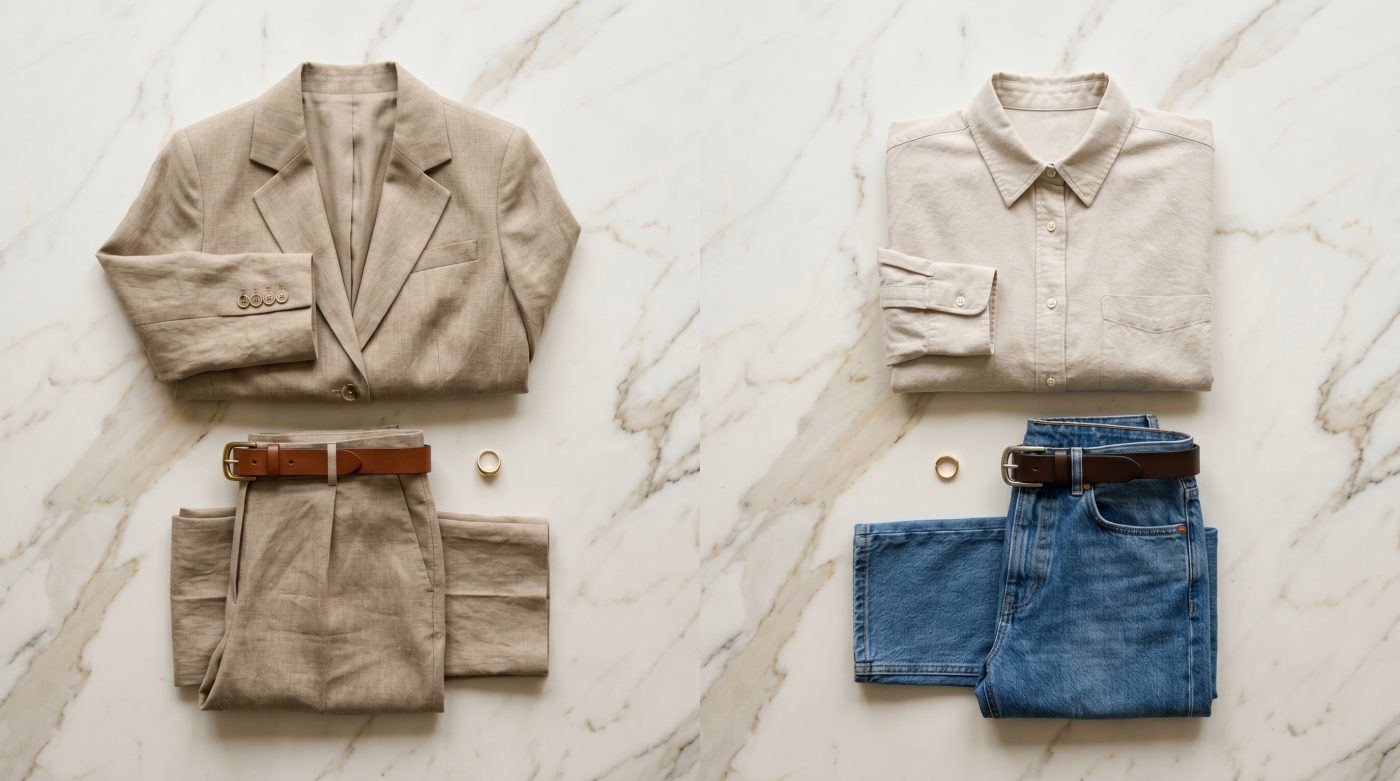
H&M wins this category outright. A basic linen shirt runs $17–$25 at H&M versus $35–$50 at Zara. For everyday basics — tees, layering pieces, casual trousers — H&M’s price-per-wear math is hard to beat.
Where it gets more nuanced: Zara’s higher-priced pieces tend to actually last longer. In my test, a $55 Zara linen blazer held its shape through 12 wears and two washes. A comparable $30 H&M blazer started pilling at the elbows by week three. You pay more upfront at Zara, but the cost-per-wear often evens out over 6–12 months.
Winner: H&M for budget shoppers; Zara for cost-per-wear over time.
Fabric & Construction Quality
This is where the gap between the two brands is most visible up close. Zara sources heavier fabrics more consistently — you’ll find actual linen, structured cotton, and viscose blends that drape well. H&M’s fabric quality is more variable: some lines feel substantial, others feel like they belong at a price point 40% lower.
Stitching and finishing also favor Zara. Seams held tighter, zippers felt more solid, and buttons didn’t loosen after washing. H&M’s construction has improved since 2022, but it still feels like a step behind at comparable price points.
Winner: Zara
Style & Trend Alignment
Zara’s design team moves fast. New drops hit the floor roughly twice a week, and they’re pulling directly from current runway trends — sometimes within weeks of a fashion week show. If you care about looking current in 2026, Zara is the easier shortcut.
H&M plays a slightly safer game. Trends arrive more slowly and are often softened for mass-market appeal. That’s not necessarily bad — safer interpretations of trends tend to stay wearable longer — but if you want edge, Zara has more of it.
Winner: Zara for trend-forward shoppers; H&M for longevity-focused buyers.
Size & Body Inclusivity
H&M wins this without much contest. Their extended size range goes up to 4XL in most product lines, and the H&M+ line is genuinely expanded — not an afterthought. Zara’s size range is more limited, and their fits skew toward a European silhouette that doesn’t always translate well for American body types.
If inclusive sizing matters to you — for yourself or when shopping for others — H&M is the significantly better option.
Winner: H&M
Sustainability Claims
Both brands have sustainability lines (Zara Join Life, H&M Conscious) and both have faced criticism for greenwashing. Neither qualifies as a genuinely sustainable brand by serious environmental standards. The honest framing: these lines use some recycled or organic materials, but represent a small fraction of total production volume.
If sustainability is a deciding factor for you, neither brand should be your first choice. But between the two, Zara’s longer garment lifespan means fewer items end up in landfill faster — a practical edge.
Draw (with the caveat that neither brand is a sustainability leader)
Who Should Pick Zara vs H&M
Choose Zara if you:
- Have a budget of $40–$80 per piece and want quality that holds up
- Follow fashion trends closely and want current looks fast
- Are building a small, intentional wardrobe with fewer but better pieces
- Shop mostly in standard sizes (XS–L)
Choose H&M if you:
- Need to dress well on a tight budget ($15–$35 per piece)
- Wear extended sizes or shop for a range of body types
- Want more store locations across the US (especially outside major cities)
- Buy basics and casual wear more than occasion pieces
People Also Ask
Q: Is Zara better quality than H&M?
A: Generally yes, especially on fabric weight and construction. Zara pieces tend to last longer with regular wear and washing. However, the quality gap has narrowed since H&M improved its premium lines around 2023.
Q: Is Zara more expensive than H&M?
A: Yes, typically 30–60% more expensive for comparable items. A Zara dress that costs $60 would likely run $30–$40 at H&M.
Q: Which brand has better sustainability practices?
A: Neither brand qualifies as genuinely sustainable by independent standards. Both have made incremental improvements, but fast fashion’s structural model limits how sustainable either can realistically be.
Q: Can I find Zara and H&M in the same mall?
A: H&M has significantly more US locations (~550 stores). Zara has roughly 100 US stores, concentrated in major metros. H&M is the more accessible option if you prefer shopping in-person outside big cities.
Q: Which is better for work outfits?
A: Zara, for most office environments. Their tailored pieces hold up better through a workweek, and the styling tends to read more polished. H&M’s work-appropriate pieces are cheaper but require more careful selection to avoid looking too casual.
Final Verdict
Zara: 8.2/10 — Better quality, stronger style, worth the price premium if you buy selectively.
H&M: 7.6/10 — Better accessibility, better sizing, better for budget-conscious shoppers who prioritize quantity and variety.
The “winner” depends entirely on what you’re optimizing for. Zara is the better brand. H&M is the better deal. Most smart shoppers use both — Zara for statement pieces, H&M for basics and casual wear.
💬 Are you Team Zara or Team H&M? Drop your answer below — and tell us which brand has surprised you (good or bad) most recently.