Overall Rating: 8.7 / 10 ⭐⭐⭐⭐
When Your Website Needs Control, Not Convenience
Most people building WordPress sites hit the same wall:
They start with Elementor or Divi because it feels easy…
…and then a few months later, the site becomes slow, messy, and impossible to scale.
That’s usually when someone “discovers” Oxygen Builder.
Not because it’s trending.
But because they need control, performance, and clean output—not drag-and-drop convenience.
Oxygen is not the kind of tool you pick to build a “quick landing page.”
It’s the kind of tool you switch to when you’re tired of fighting page builder limitations.
And that difference explains everything about why people either love it deeply or quit it quickly.
Brand Background
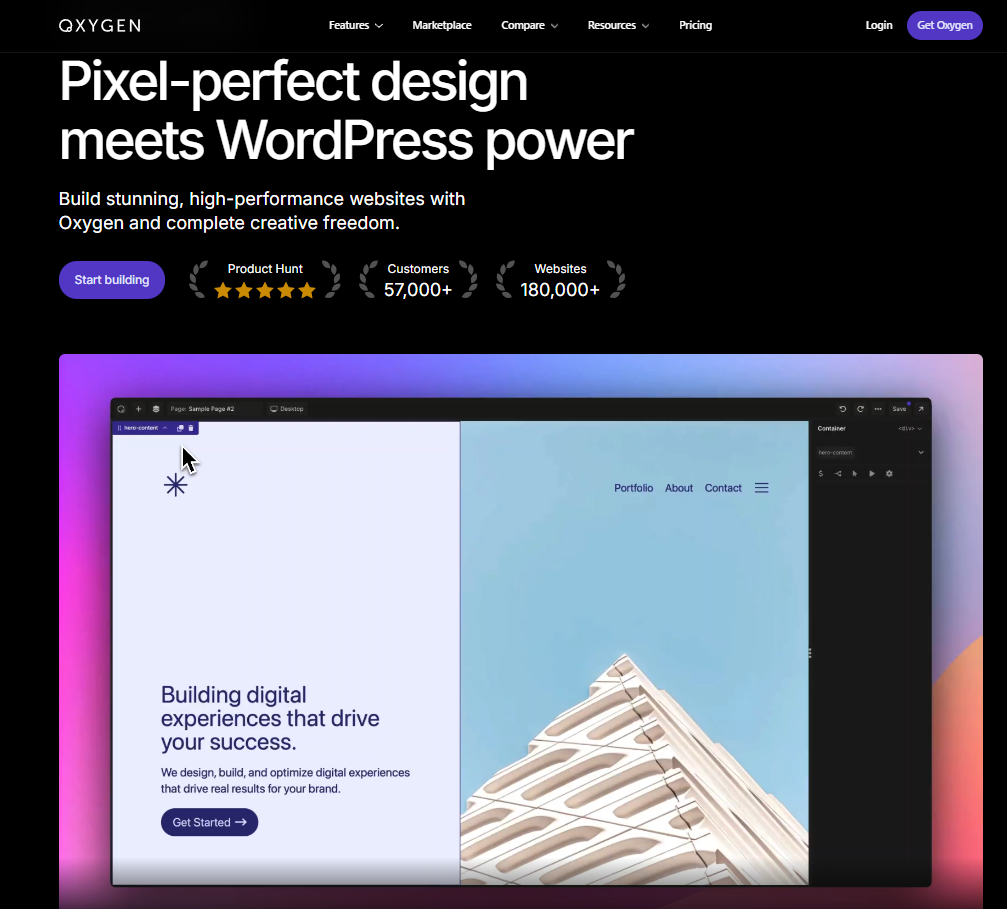
Oxygen Builder is developed by Soflyy, first released around 2016, and positioned very differently from mainstream WordPress builders.
Instead of layering on top of WordPress themes like Elementor or Divi, Oxygen replaces the theme system entirely and becomes the visual layer of the website.
That decision alone changes everything:
- No traditional theme dependency
- Full control over templates, headers, footers
- Direct HTML/CSS structure control
- Developer-first architecture instead of marketer-first UI
Over time, Oxygen became known in the WordPress ecosystem as:
“The builder for developers who hate page builders.”
More recently, the ecosystem shifted toward Breakdance (from the same team), which created confusion in the market about Oxygen’s long-term direction—but Oxygen itself is still actively used, especially in performance-focused and agency environments.
Product Deep Dive
1. Theme Replacement System (The Biggest Difference)
Most WordPress builders sit on top of a theme.
Oxygen does the opposite—it removes the theme entirely.
The problem this solves:
Themes often create:
- unnecessary CSS bloat
- layout conflicts
- limited customization
- unpredictable updates
How Oxygen solves it:
You build the entire site structure yourself:
- Header
- Footer
- Blog templates
- Archive pages
- WooCommerce layouts
Everything is controlled inside Oxygen.
Why it matters:
This is where Oxygen feels less like a “builder” and more like a visual development environment.
But the tradeoff is clear:
If you don’t understand structure → you will feel lost fast.
2. Clean Code Output (Performance Advantage)
One of Oxygen’s strongest selling points is its output structure.
The problem:
Most page builders generate:
- nested divs
- heavy CSS classes
- redundant wrappers
- performance overhead
Oxygen’s approach:
It minimizes unnecessary markup and gives more direct control over structure.
Real impact:
- Faster load times compared to heavy builders
- Cleaner DOM structure
- Better long-term scalability
This is one of the main reasons developers still choose it in 2026 despite newer tools.
3. Dynamic Content & Advanced Layout Control
Oxygen is not just for static pages.
It supports:
- custom post types
- dynamic loops
- conditional logic
- ACF integration
- reusable templates
The problem it solves:
Most builders struggle when a site becomes “data-driven.”
Why Oxygen stands out:
It behaves closer to a developer framework than a visual editor.
You’re not just placing blocks—you’re building logic-driven layouts.
This is where Elementor users often hit a wall and migrate.
4. Learning Curve (The Real Barrier)
This is where Oxygen loses most beginners.
The problem:
Oxygen does not feel like:
It feels closer to:
- visual HTML/CSS editing
- structure-first development
What users struggle with:
- No instant “drag and decorate” workflow
- More decisions required per element
- Less guided UI
- Requires understanding layout concepts
Why this matters:
Many users abandon Oxygen not because it is bad…
…but because it does not “hold your hand.”
This is intentional design, not a flaw.
5. Pricing Model (One-Time License)
Oxygen is known for its lifetime pricing model.
The appeal:
- One-time payment
- Unlimited websites (depending on plan)
- No recurring subscription fatigue
Why it matters:
Compared to Elementor Pro or SaaS builders, long-term cost can be significantly lower.
But:
You pay in learning time instead of monthly fees.
Real-World Performance
Across developers and agencies, Oxygen is usually described in a very consistent pattern:
- Extremely powerful once mastered
- Frustrating in the first weeks
- Very stable for long-term projects
- Rarely used for “quick client sites”
Typical long-term users report:
- fewer performance issues over time
- less dependency on plugins
- more predictable site behavior
But beginners often report:
- confusion with structure
- slower initial workflow
- lack of intuitive onboarding
So the gap between “first impression” and “long-term value” is very wide.
Pricing Analysis
Oxygen’s pricing is one of its strongest psychological advantages.
Compared to competitors:
- Elementor Pro → recurring yearly cost
- Webflow → monthly SaaS cost
- Divi → subscription or lifetime option
Oxygen:
- One-time payment model
- Lower lifetime cost for agencies
Cost-per-site over 2–3 years becomes significantly cheaper than subscription tools.
But the real cost is not money—it’s onboarding time.
Honest Limitations
1. Not beginner-friendly
If you are new to WordPress structure concepts, Oxygen feels overwhelming fast.
2. Smaller ecosystem than Elementor
Fewer tutorials, templates, and third-party add-ons.
3. Steep learning curve slows client work initially
Agencies often need onboarding time before productivity increases.
4. Market uncertainty perception
Because the team also builds newer tools, some users feel uncertain about long-term focus—even though Oxygen is still used widely.
Competitive Comparison
Oxygen vs Elementor
Elementor wins on ease of use.
Oxygen wins on performance and control.
Oxygen vs Divi
Divi is more visual and beginner-friendly.
Oxygen is significantly more technical and structured.
Oxygen vs Webflow
Webflow feels smoother for designers.
Oxygen feels more powerful for WordPress-based developers.
Oxygen vs Breakdance
Breakdance is essentially the “modern UI evolution” of Oxygen’s philosophy.
Oxygen is more raw and developer-centric.
Who Should Use Oxygen Builder?
Ideal users:
- WordPress developers
- Performance-focused agencies
- Advanced users tired of page builder bloat
- People building complex dynamic sites
- Users comfortable with structure + logic thinking
Not a good fit for:
- Beginners building first websites
- Non-technical business owners
- Users who want fast drag-and-drop design
- People who rely heavily on prebuilt templates
Final Verdict
Oxygen Builder is not trying to compete with Elementor on ease of use.
It competes on control, performance, and architectural freedom.
And that is why it remains relevant even in a crowded WordPress ecosystem.
But it is also why many users quit too early—they expect convenience, not complexity.
If you want something fast and simple, Oxygen will feel frustrating.
If you want something powerful enough to feel like “building a system instead of a page,” Oxygen is still one of the strongest WordPress tools available.
Detailed Scorecard
| Category |
Score |
Note |
| Performance |
9.2/10 |
Very clean output vs competitors |
| Flexibility |
9.5/10 |
Full control over structure |
| Ease of Use |
6.8/10 |
Steep learning curve |
| Design Speed |
7.5/10 |
Slower for beginners |
| Developer Experience |
9.6/10 |
Excellent control and logic |
| Ecosystem |
7.8/10 |
Smaller community vs Elementor |
| Pricing Value |
9.3/10 |
Strong lifetime value |
| Scalability |
9.4/10 |
Great for complex sites |
| Beginner Friendliness |
6.5/10 |
Not recommended for first-time users |
| Overall Rating |
⭐ 8.7 / 10 |
A developer-grade builder disguised as a visual tool |
Disclaimer
This review is based on general product analysis and user experience patterns in the WordPress ecosystem. Performance and usability may vary depending on hosting environment, project complexity, and user skill level.