Quick note on approach: this review is based on hands-on research of GlobLinker’s official country-coverage page, product FAQs, and public customer testimonials. We have not personally traveled through all 130+ listed countries to test live signal quality, and we say that plainly rather than pretend otherwise.
Quick Verdict: GlobLinker Countries Coverage
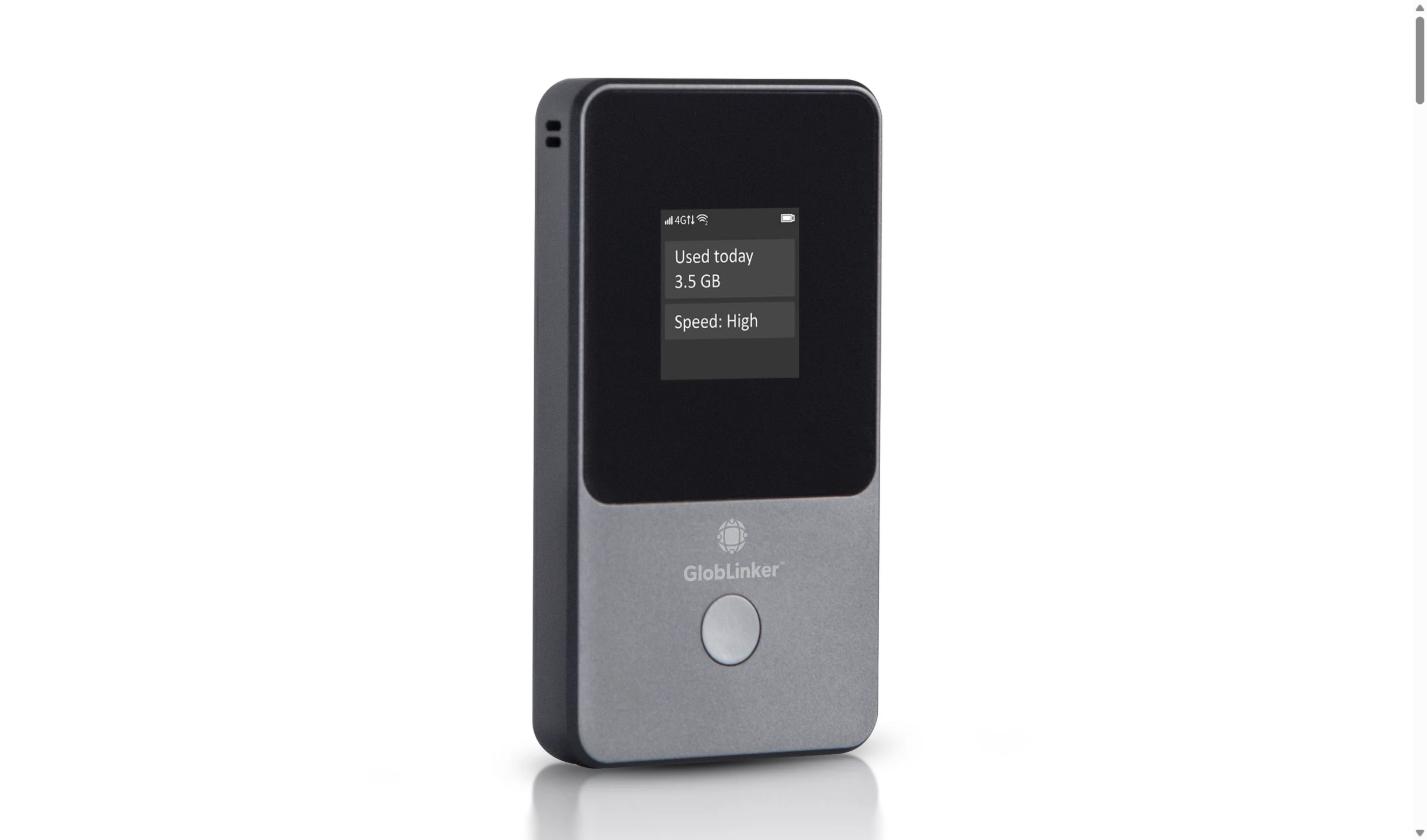
GlobLinker lists coverage across 130+ countries spanning North America, Asia, Latin America, Europe, Oceania, the Middle East, and Africa, using CloudSIM AI technology to auto-connect to the strongest local carrier without a physical SIM swap. See which countries GlobLinker covers on the official store before deciding if it fits your travel route, since coverage density varies a lot by region.
GlobLinker Countries List: What Is Actually Covered?
The GlobLinker countries list breaks down into seven regions. North America (Canada, Mexico, USA) and Asia (24 markets including Japan, South Korea, Vietnam, Thailand, and India) are well represented, as is Europe, which covers nearly 50 countries and territories from Germany and France down to smaller markets like Andorra, Monaco, and the Faroe Islands. Latin America adds roughly 27 countries, and Oceania covers Australia, New Zealand, and a handful of Pacific territories.
Within the GlobLinker countries list, the Middle East and Africa sections are noticeably thinner. The Middle East list has 9 countries, with Israel marked “(soon)” rather than active. Africa lists around 16 nations, concentrated in North and East Africa (Egypt, Morocco, Kenya, Tanzania, Rwanda) and a scatter of others, leaving large parts of Central and West Africa outside the published list. If your travel is concentrated in these regions, it is worth double-checking the current list before buying, since “130+ countries” as a headline number can make coverage sound more uniform than it is.
Real Experience: Using GlobLinker Across Borders
How Country Switching Works
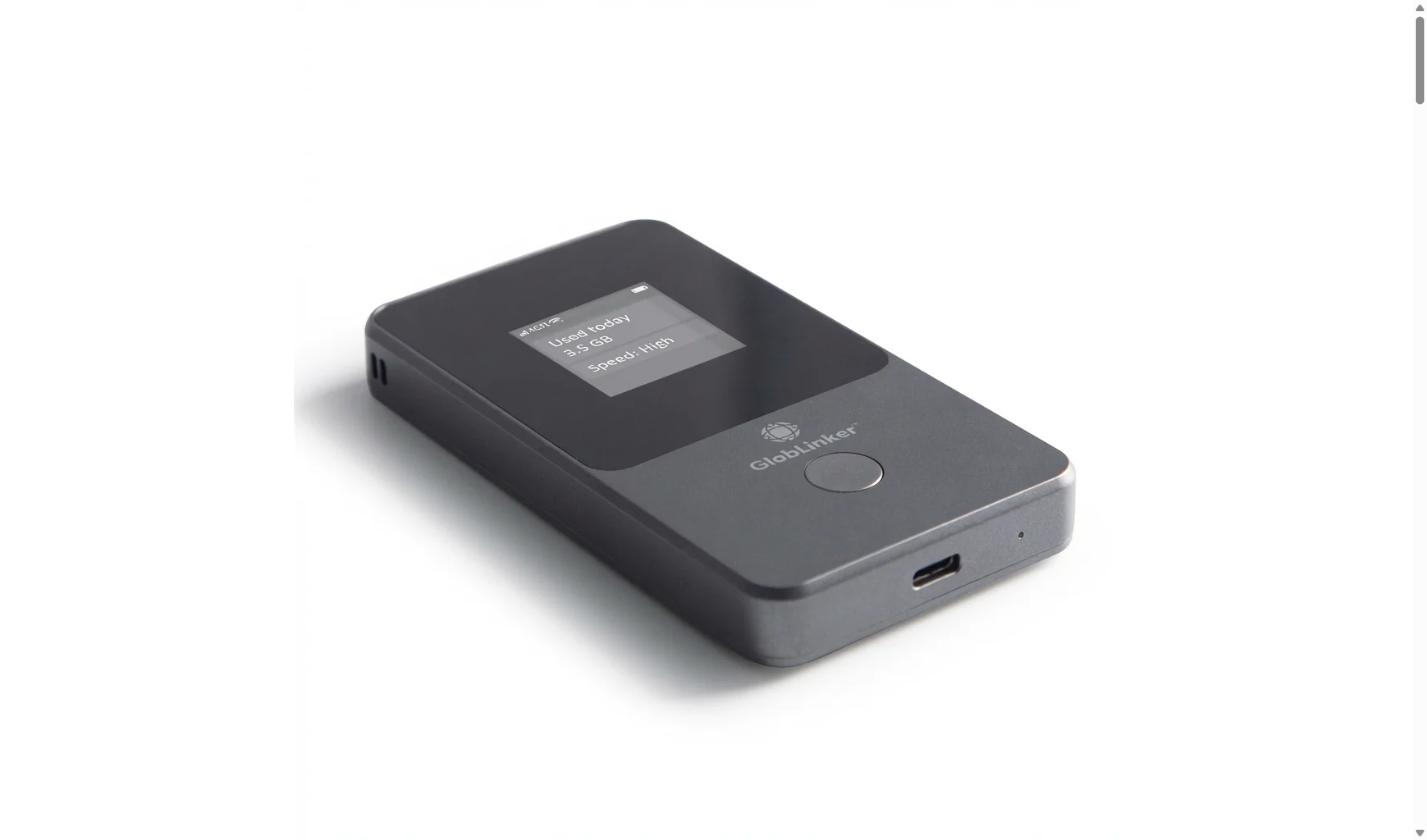
There is no SIM to swap when crossing a border. GlobLinker’s CloudSIM AI technology scans the carriers available at your location and connects to the strongest one automatically, the same way it works domestically in the US. For data abroad, you log into the customer portal and buy a prepaid international pack, ranging from 3GB to 100GB, at an average of $0.90 per GB, dropping to around $0.65 per GB on the larger packs. There is no subscription and no recurring charge either way.
Marketing Claims vs Reality
Two things are worth flagging plainly. First, GlobLinker’s own pages are inconsistent about device limits: the main product page and its FAQ both say “up to 8 devices at once,” while the Supported Countries FAQ page says “up to 16 devices.” We could not verify which figure is current, so we would not rely on either number without checking with the seller for your specific use case. Second, the “130+ countries” framing is accurate as a total count, but the regional breakdown shows coverage is heavily weighted toward North America, Europe, and Asia, with comparatively sparse listings for Africa and the Middle East.
Pros and Cons for International Travel
Pros: No SIM card swapping at any border; auto-switches to the strongest local carrier; free 2GB/month for life that can convert toward international use; prepaid international data with no subscription; same physical device works across all listed regions.
Cons: Middle East and Africa coverage is limited compared to the Americas, Europe, and Asia; device-count claims differ between GlobLinker’s own pages; international per-GB pricing is higher than domestic US packs; independent, region-by-region speed data is not publicly available.
GlobLinker vs Buying a Local SIM Card Abroad
For travelers who currently buy a new prepaid SIM in every country, GlobLinker’s pitch is convenience: one device, no shopping for a local SIM shop on arrival. Here is how the two approaches compare:
| Factor |
GlobLinker |
Local SIM Card |
| Setup effort per country |
None, auto-connects on arrival |
Find a shop, register, install |
| Same device every country |
Yes |
No, new SIM each time |
| Upfront cost |
$165 for the device (40% off list) |
Usually low or free per SIM |
| Typical data cost |
~$0.65-0.90 per GB prepaid |
Varies widely by country |
| Free lifetime data |
2GB/month, stacks forever |
None |
| Coverage in Africa/Middle East |
Limited (9 and 16 countries) |
Depends on local carrier availability |
| Carrier flexibility |
Auto-switches networks |
Locked to the SIM’s carrier |
Pricing for International Data Plans
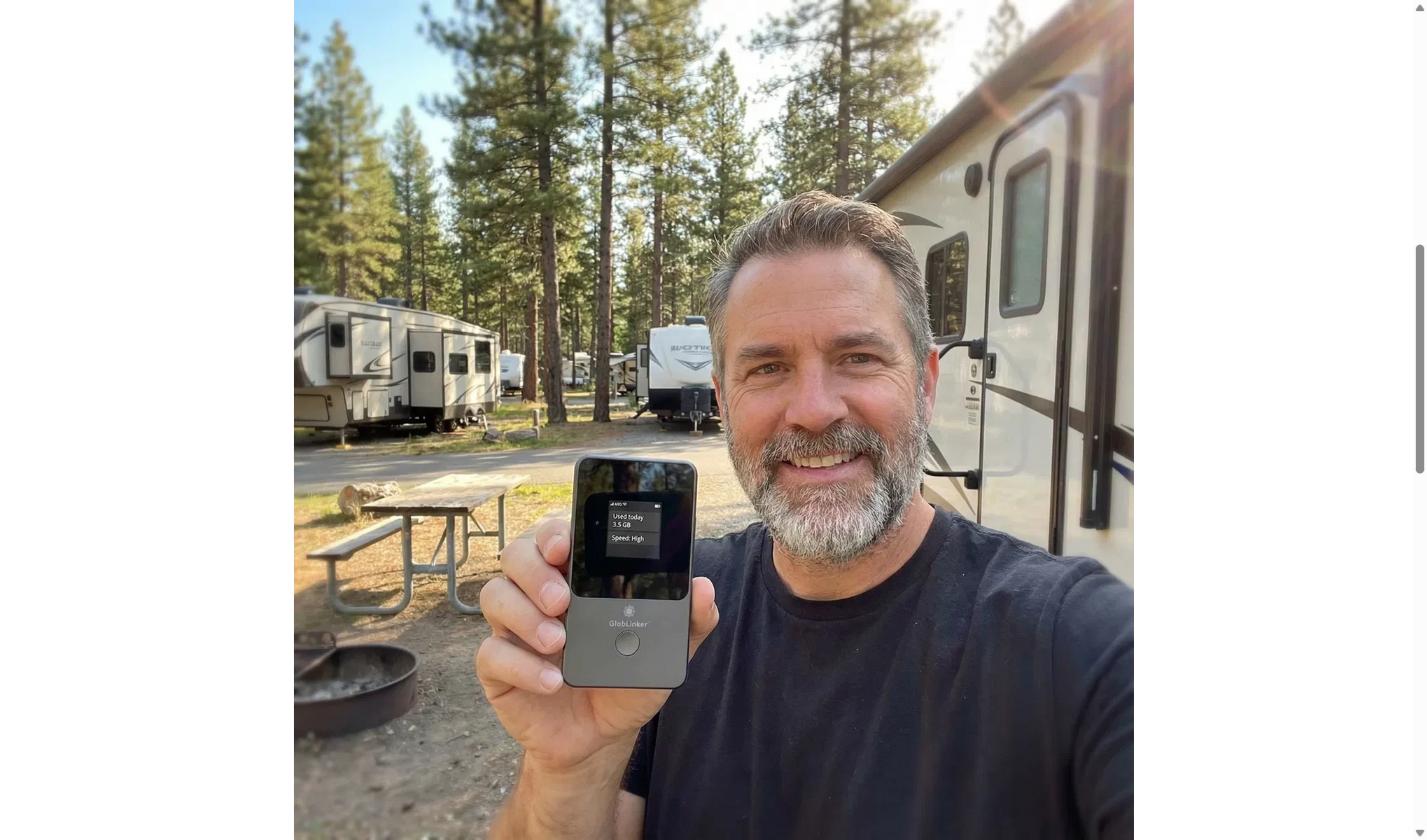
International prepaid packs run from 3GB to 100GB, averaging $0.90 per GB and dropping to about $0.65 per GB on the largest packs, on top of the free 2GB-per-month-for-life allowance that GlobLinker says can be converted toward international use. Compare GlobLinker’s international data pricing on the official store for the countries on your itinerary, since promotional pricing on the device itself can change.
Final Verdict: Is GlobLinker Worth It for Multi-Country Travel?
For travelers whose routes run mostly through North America, Europe, and Asia, the GlobLinker countries list looks solid on paper and the auto-switching pitch is genuinely convenient versus juggling local SIMs. For itineraries weighted toward Africa or the Middle East, the published list is thinner, so it is worth checking your specific countries first. Check current GlobLinker international availability on the official store before you commit to a multi-country trip.
FAQs
Does GlobLinker work in every country on the GlobLinker countries list?
The GlobLinker countries list covers 130+ supported countries by region, but real-world performance depends on local network strength, which GlobLinker does not guarantee for every listed country.
How do I buy international data?
You log into GlobLinker’s customer portal, pick a prepaid international pack between 3GB and 100GB, and pay. There is no subscription or recurring charge.
What happens if I travel to a country not on the GlobLinker countries list?
GlobLinker’s marketing does not describe fallback behavior outside the GlobLinker countries list, so travelers heading to unlisted destinations should confirm coverage with the seller before relying on the device there.
Does unused international data roll over?
GlobLinker states that unused free lifetime data (2GB/month) stacks forever. Prepaid international packs are a separate purchase, and the site does not publish an expiration policy for those beyond noting they are prepaid and optional.
Is GlobLinker better than an international eSIM?
It depends on your trip. GlobLinker avoids swapping SIMs or eSIM profiles between countries and includes free lifetime data, while an eSIM may offer more granular per-country plans. Neither publicly discloses independent speed-test data, so the honest answer is that both rely on local carrier quality more than the device or SIM itself.